



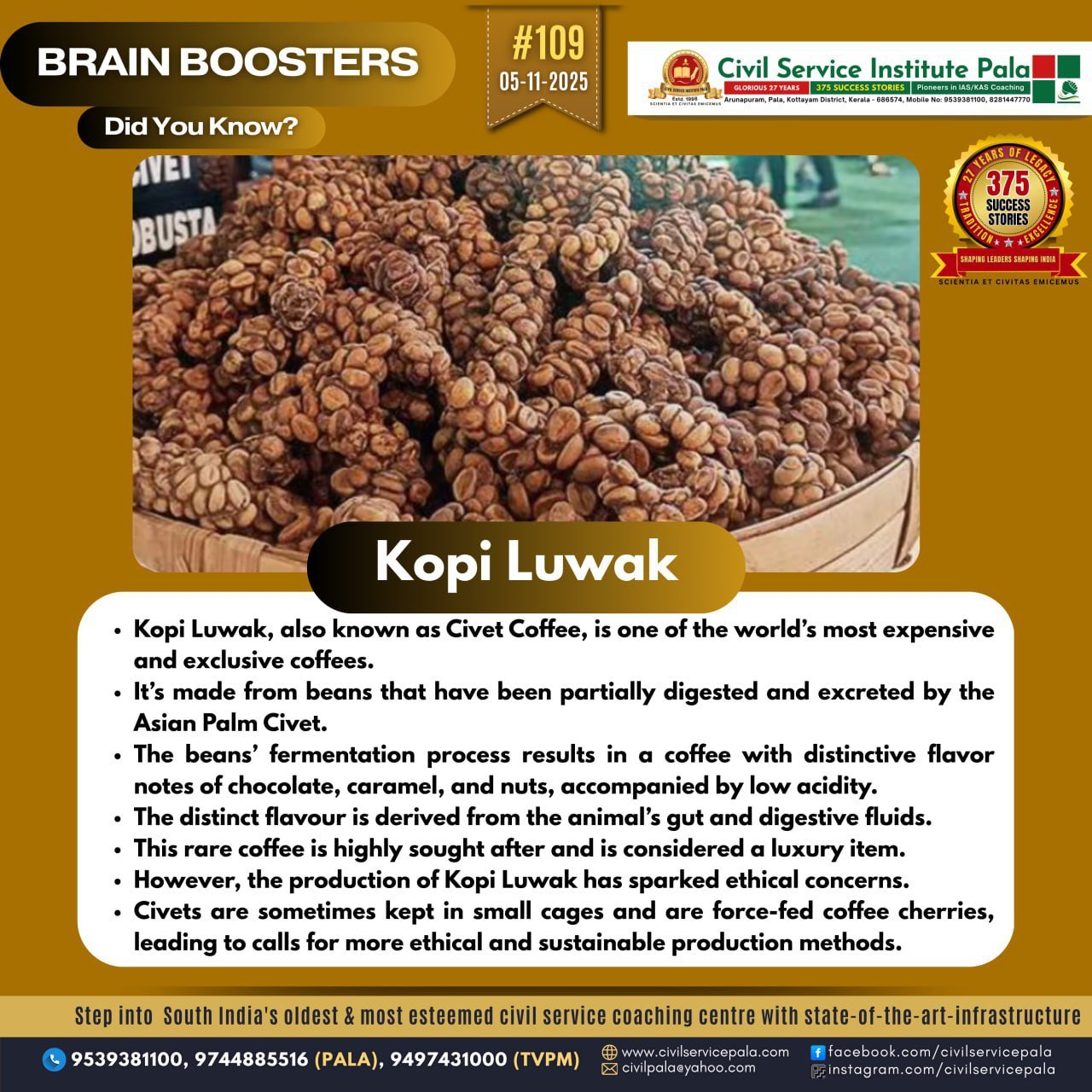
Kopi Luwak
Kopi Luwak is one of the world’s most expensive and unique types of coffee, originating mainly from Indonesia (especially Sumatra, Java, and Bali). It’s also produced in the Philippines and Vietnam. What is Kopi Luwak? Kopi Luwak literally means “civet coffee” in Indonesian. It is made using coffee beans that have been eaten and excreted by the Asian palm civet, a small cat-like animal. The beans are collected from the civet’s feces, cleaned, processed, and roasted to make coffee.
How it is Made? The civet eats ripe coffee cherries. Inside its digestive system, the outer pulp is digested, but the coffee beans remain intact. Fermentation occurs in the civet’s stomach, altering the beans’ chemical composition.
The beans are excreted, collected, washed thoroughly, sun-dried, roasted, and ground to make coffee. Unique Features The digestive process reduces the beans’ bitterness and enhances smoothness. It gives a distinct flavor — often described as earthy, rich, and less acidic. Only small quantities are produced each year, making it rare and expensive.
Price and Popularity It is one of the most expensive coffees in the world, often costing $100 to $600 per pound or more. Popular among coffee enthusiasts for its exclusivity and unusual production method. Controversies Ethical concerns: In many places, civets are captured and kept in cages to mass-produce Kopi Luwak, leading to animal cruelty. Authenticity issues: Many brands fake or mix Kopi Luwak with regular coffee beans. Ethical producers now promote wild-sourced Kopi Luwak (beans collected from wild civets).
