



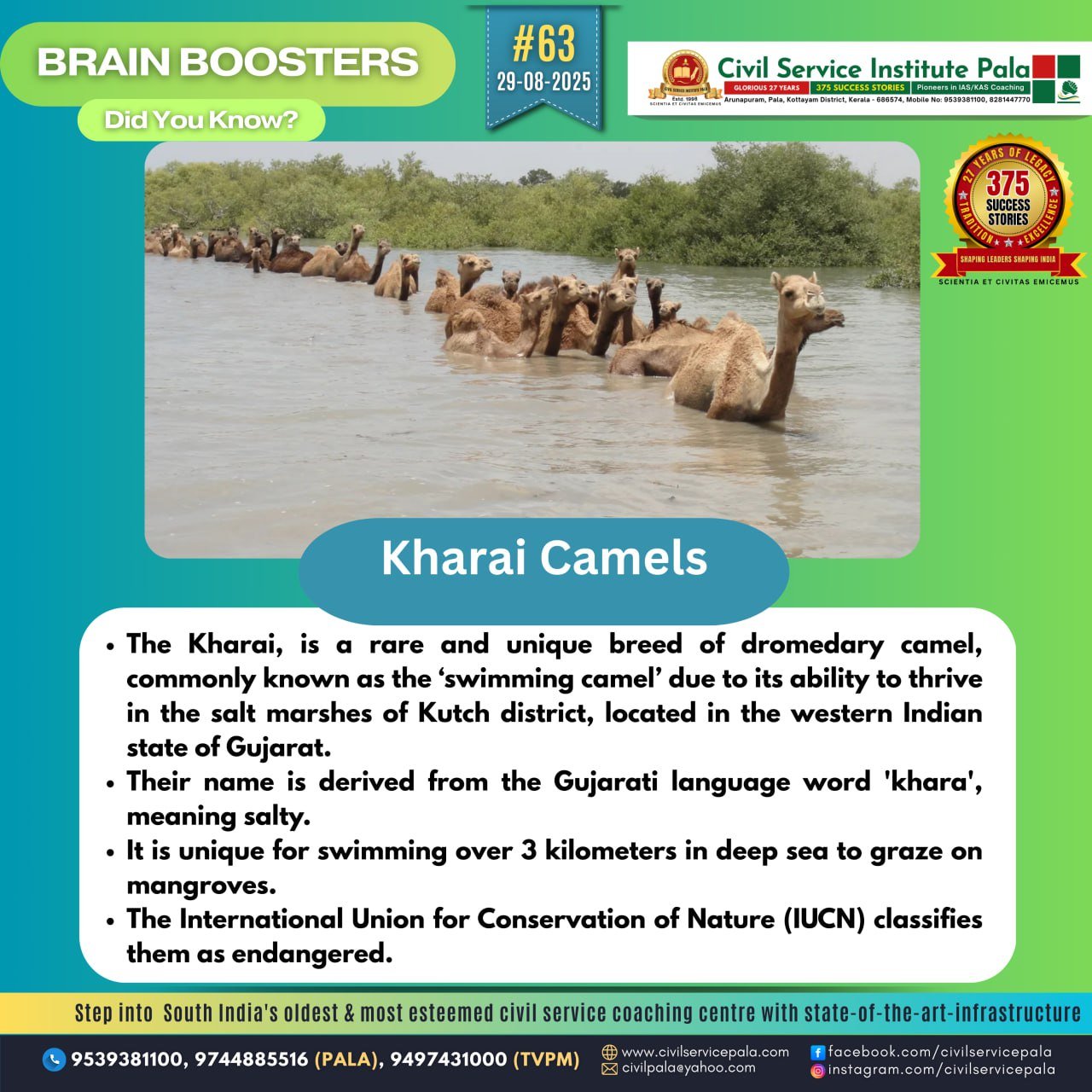
Kharai camels
Kharai camels are a unique and rare breed of camels found mainly in the Kutch region of Gujarat, India. They are sometimes called "swimming camels" because of their extraordinary ability to swim in the sea to reach mangroves for grazing — a characteristic that sets them apart from other camel breeds.
Unique Features of Kharai Camels Swimming ability:
They can swim up to 3 km into the sea to reach mangrove islands for food. Dual habitat: Adapted to live in both desert (sandy areas) and coastal ecosystems (mangrove forests). Strong physique: Medium-sized with strong legs suited for long walks in arid areas and swimming in tidal waters. Diet: Primarily feed on mangroves, which are high in salt content, making them tolerant to saline vegetation. Milk: Their milk is considered highly nutritious, with medicinal properties (rich in minerals and believed to help with diabetes and immunity).
Habitat & Distribution Found mostly in the Kutch region of Gujarat, especially in areas like Bhuj, Lakhpat, and coastal belts. Depend on the mangrove forests of the Arabian Sea for food.
Community & Cultural Role Traditionally reared by the Maldhari (pastoral) community, especially the Fakirani Jats of Kutch. The camels are central to their livelihood, providing milk and limited transportation. Recognized as an integral part of coastal pastoral culture.
Conservation Concerns Endangered status:
Listed as a threatened breed by the Food and Agriculture Organization (FAO). Population decline: Due to shrinking mangrove cover (from industrial development, salt industries, and climate change). Livelihood impact: As mangroves vanish, camel herders are losing their primary grazing grounds, threatening both the animal and traditional ways of life. Efforts are being made by NGOs and the Gujarat government to conserve the breed and protect mangrove ecosystems.
Importance Symbol of the unique desert–coastal ecosystem of Gujarat. A living example of animal adaptation to diverse ecosystems. Provides a sustainable livelihood option to coastal pastoral communities.
