



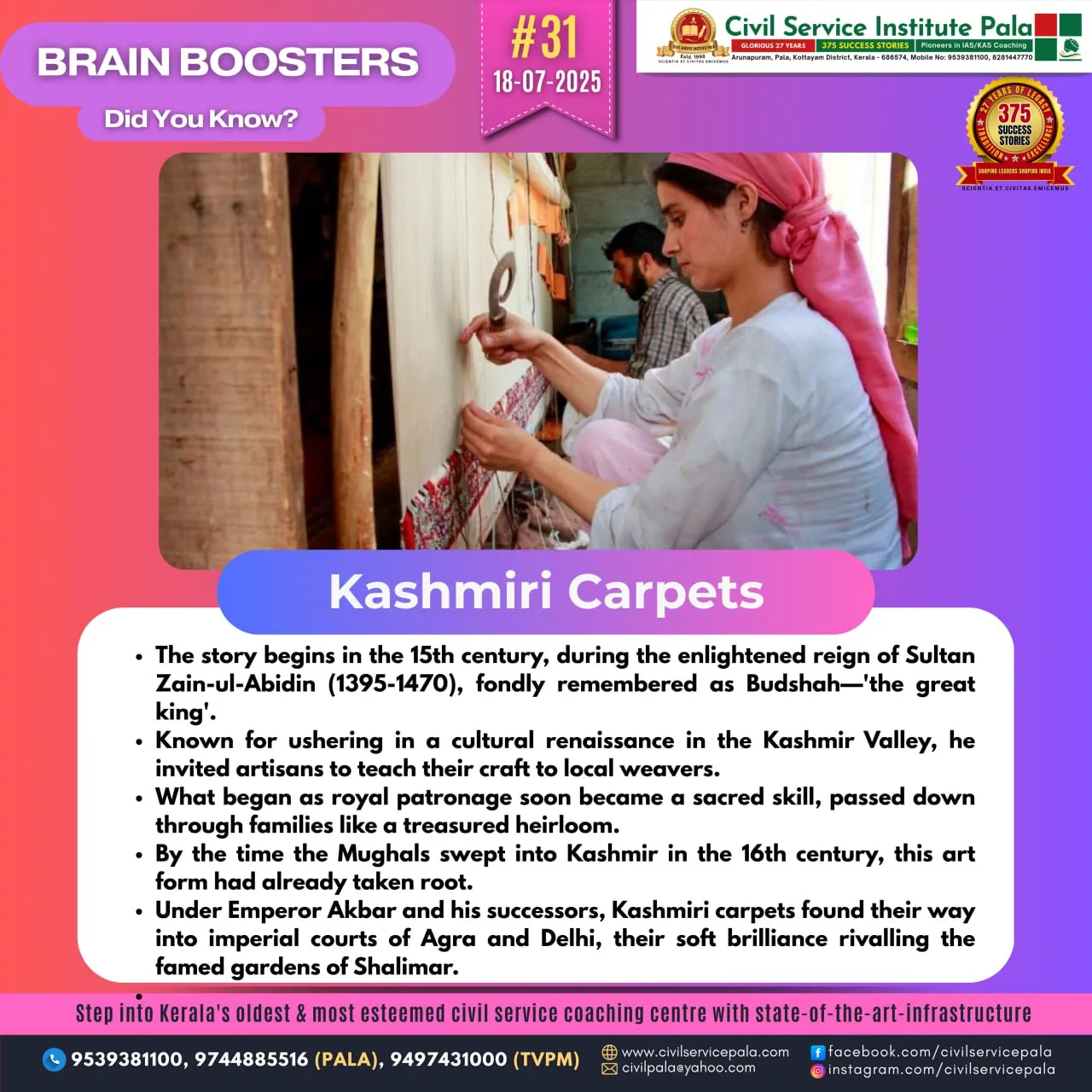
Kashmiri carpets
Kashmiri carpets, also known as Kaleen, have a rich and ancient history dating back to the 15th century, during the reign of Sultan Zain-ul-Abidin (1420–1470). He is credited with introducing the art of carpet weaving to Kashmir by inviting Persian artisans to train local craftsmen. This resulted in a fusion of Persian techniques with Indian artistic traditions, giving birth to the unique and intricate Kashmiri carpet designs we see today.
Initially woven in royal workshops, carpets were created for palaces and mosques.
The influence of Mughal aesthetics further enriched the craft during the 16th and 17th centuries.
Over centuries, carpet weaving became an integral part of Kashmiri heritage and a vital rural cottage industry.
Features & Craftsmanship
Hand-knotted using silk, wool, or a silk-wool blend on cotton or silk base.
Knot density can go up to 900 knots per square inch, showing exceptional craftsmanship.
Designs often feature Persian motifs like:
Chinar leaves
Tree of Life
Paisleys
Lotuses, arabesques, and geometric patterns
Each carpet takes anywhere from several months to years to complete, depending on size and complexity.
Significance of Kashmiri Carpets
1. Cultural Heritage-Represents the fusion of Persian and Indian art.
Carpets are seen as family heirlooms passed across generations.
2. Economic Importance
Major component of Kashmir’s handicraft exports.
Sustains thousands of artisans and supports the rural economy.
3. Symbol of Prestige
Due to their exquisite quality, they are often used in luxury décor.
Found in palaces, embassies, five-star hotels, and elite homes globally.
4. GI-Tagged Product
Kashmiri carpets have Geographical Indication (GI) status, protecting authenticity and ensuring global recognition.
5. Spiritual and Artistic Value
Traditional motifs often have symbolic meanings reflecting harmony, nature, and spirituality.
They are considered a form of meditative art by many artisans.
