



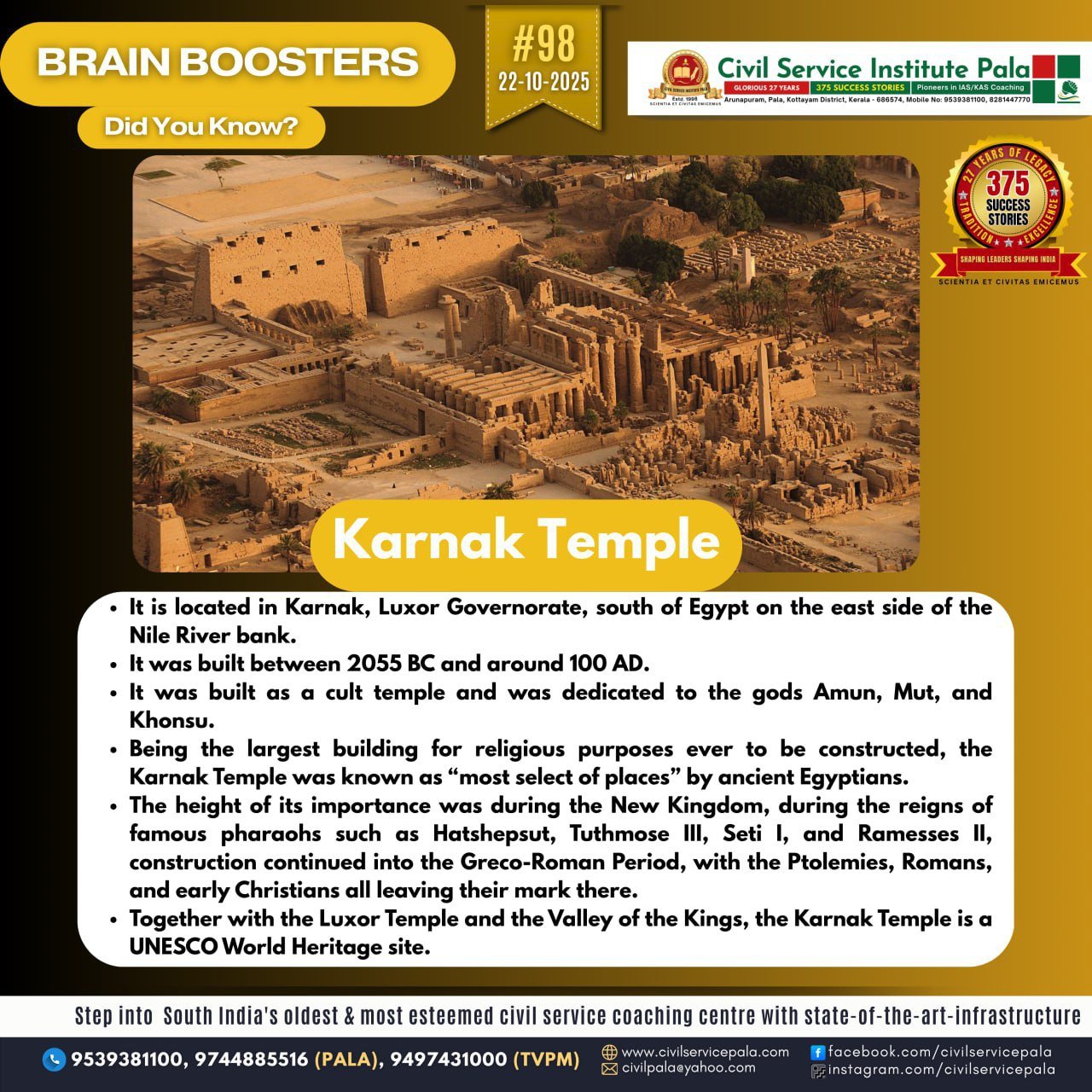
Karnak Temple
Location: Situated in Luxor (ancient Thebes), Egypt, on the east bank of the River Nile.
Dedication: Primarily dedicated to the Theban triad — Amun, Mut, and Khonsu.
Construction period: Built and expanded over a period of about 2,000 years (from around 2055 BCE to 100 AD).
Built by: Several pharaohs contributed to it, including Senusret I, Hatshepsut, Thutmose III, Seti I, and Ramses II.
Largest religious complex: Considered the largest ancient religious complex ever constructed in the world.
Main parts: Includes the Great Temple of Amun, the Temple of Khonsu, the Temple of Mut, and the famous Hypostyle Hall with 134 massive columns.
Architecture: Noted for its massive pylons, obelisks, statues, and relief carvings depicting pharaohs and gods.
Sacred Lake: Contains a large sacred lake used for ritual purification by priests. Religious significance: Served as the center of worship of Amun-Ra, the chief deity of the New Kingdom.
Tourist attraction: Today, it is a major archaeological and tourist site, part of the UNESCO World Heritage Site of Ancient Thebes.
