



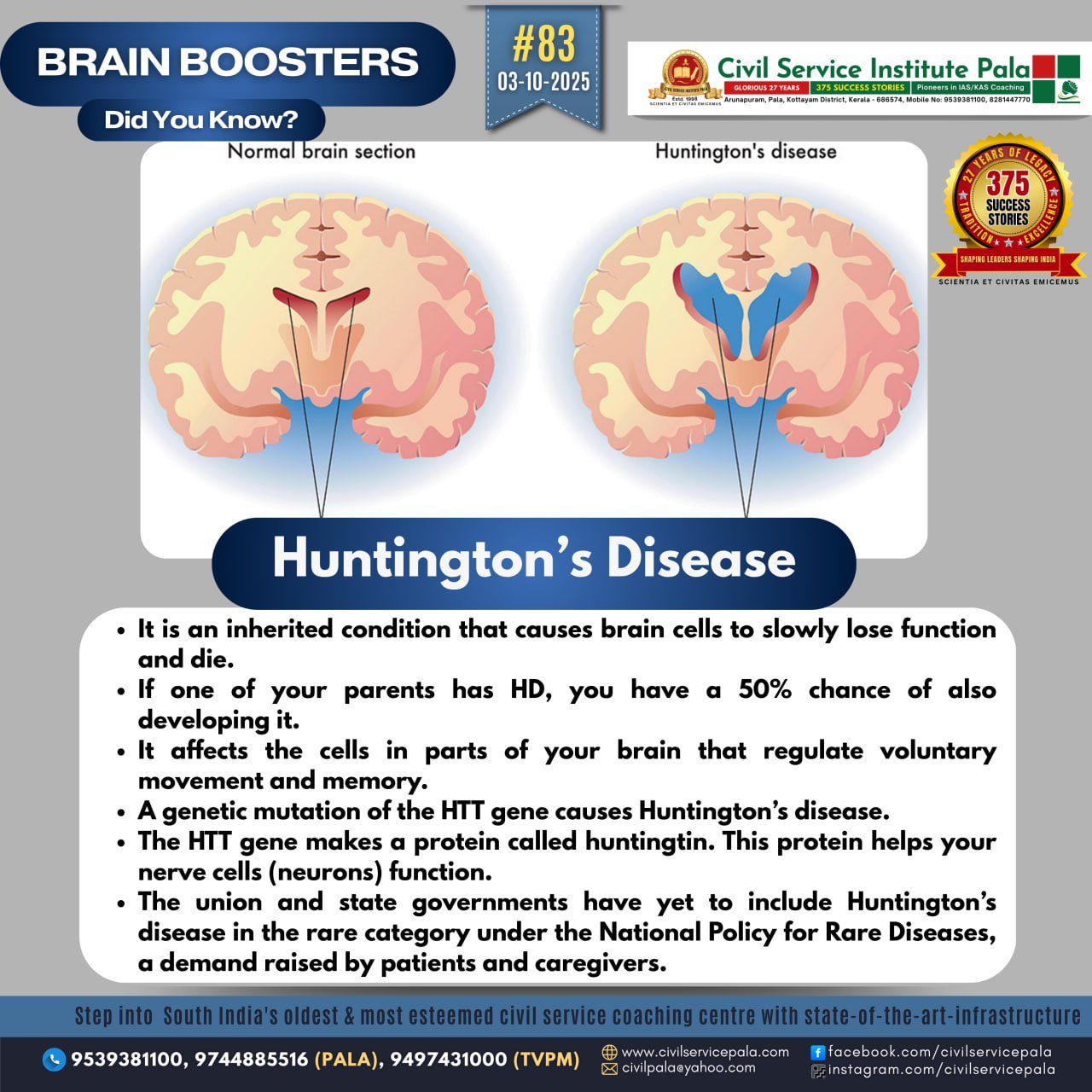
Huntington’s disease (HD)
Huntington’s disease (HD) is a rare, inherited neurodegenerative disorder that causes the progressive breakdown of nerve cells in the brain. It affects movement, cognition (thinking ability), and behavior.
Cause Genetic basis:
HD is caused by a mutation in the HTT gene on chromosome 4. The mutation involves an abnormal repetition of the CAG trinucleotide sequence (normally <35 repeats, but in HD ≥36). More repeats = earlier and more severe onset of symptoms.
It is autosomal dominant, meaning a child of an affected parent has a 50% chance of inheriting the condition.
Symptoms
Symptoms usually appear between 30–50 years of age, though juvenile forms can occur earlier. They progress gradually and include: Movement problems Involuntary jerky movements (chorea) Muscle problems (rigidity, dystonia) Impaired coordination and balance Difficulty with speech and swallowing Cognitive decline Difficulty planning, organizing, and concentrating Memory decline Reduced ability to learn new things Eventual dementia Psychiatric and behavioral changes Depression, anxiety, irritability Social withdrawal Impulsive or aggressive behavior In some, psychosis Progression The disease typically worsens over 10–25 years. Patients eventually lose independence, requiring full-time care.
Death often results from complications such as pneumonia, heart disease, or falls. Diagnosis Genetic testing confirms the HTT mutation. Brain imaging (MRI/CT) may show brain atrophy (shrinking of caudate nucleus and putamen). Clinical evaluation of symptoms supports diagnosis.
Treatment
There is no cure, but treatments manage symptoms: Medications: Tetrabenazine / deutetrabenazine (for chorea) Antipsychotics (for mood swings, aggression, psychosis) Antidepressants and mood stabilizers
Therapies:
Physical, occupational, and speech therapy help maintain daily functioning. Supportive care: Nutrition management, psychological support, and long-term care planning. Research Ongoing studies explore gene-silencing therapies, stem-cell treatments, and neuroprotective drugs. Clinical trials aim to slow or halt disease progression.
In short: Huntington’s disease is a progressive, hereditary brain disorder caused by a genetic mutation, leading to movement disorders, cognitive decline, and psychiatric issues. It is incurable, but supportive care and new therapies under research offer hope for better management.
