



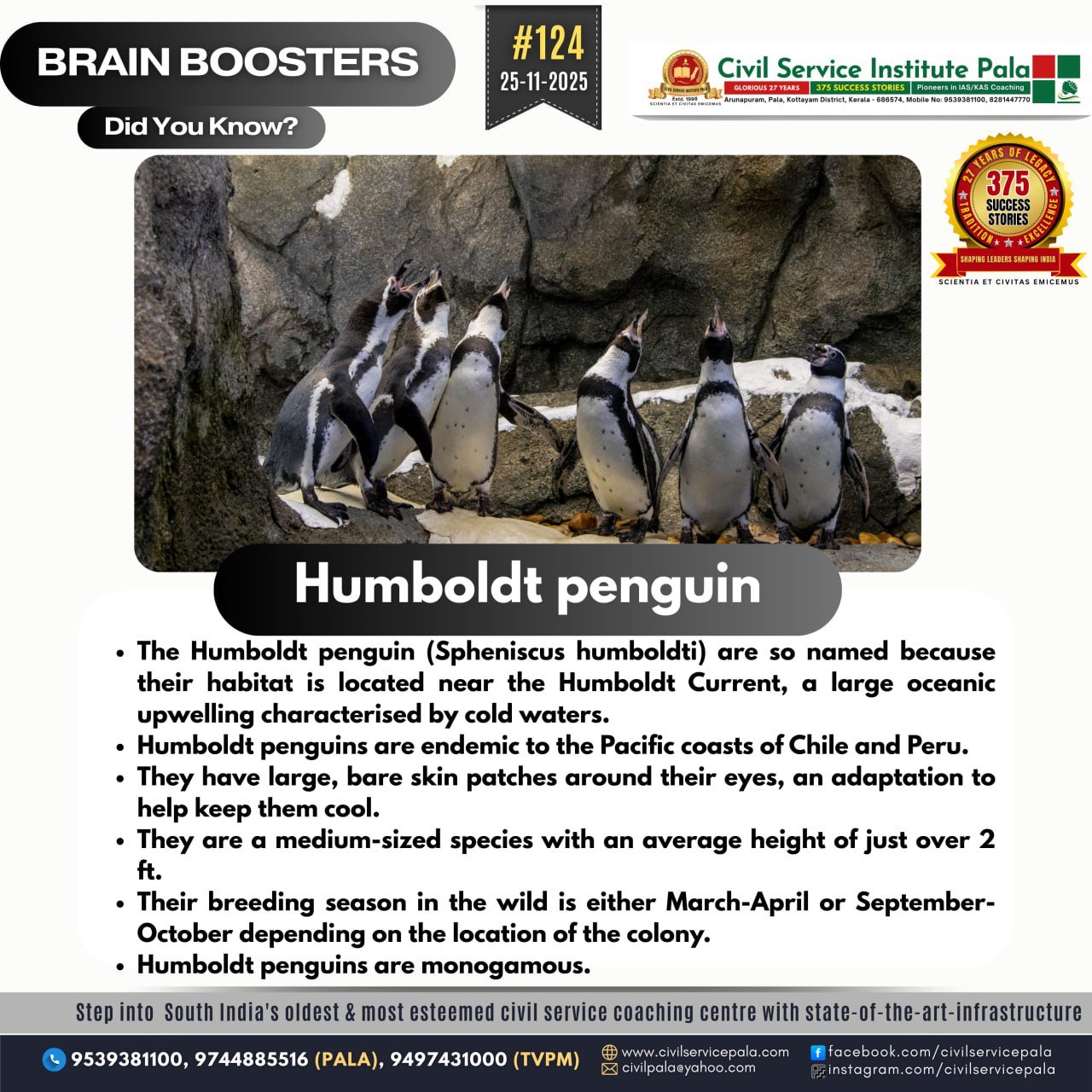
Humboldt Penguins
Humboldt penguins (Spheniscus humboldti) are a medium-sized penguin species native to the west coast of South America, especially Peru and northern Chile. They are named after the Humboldt Current, the cold nutrient-rich ocean current that flows along this region.
Key Features
Size: About 65–70 cm tall, weighing 4–5 kg.
Appearance:
Black back and white belly.
A distinctive black band across the chest forming an inverted horseshoe shape.
Pink patches of bare skin around the eyes help them regulate body temperature.
Swimming: Excellent swimmers (can reach up to 30–40 km/hr).
Habitat
They live along the rocky coasts and islands of Peru and Chile.
Prefer the cool waters of the Humboldt Current, which supports plenty of fish.
They hunt underwater using agility and speed.
Breeding & Nesting
They nest in burrows, crevices, or scrapings in guano (bird droppings).
Usually lay two eggs.
Both parents share incubation and feeding responsibilities.
Their breeding season can occur year-round.
Conservation Status
IUCN Status: Vulnerable
Population is declining due to:
Climate change and warming oceans
Overfishing of their prey
Habitat disturbance
Guano mining (destroys nest sites)
Pollution and oil spills
Interesting Facts
Humboldt penguins cannot tolerate extreme heat and depend on cool waters and shaded burrows.
They are closely related to Magellanic and African penguins.
Found in several zoos and aquariums (including in India) for breeding and conservation awareness.
