



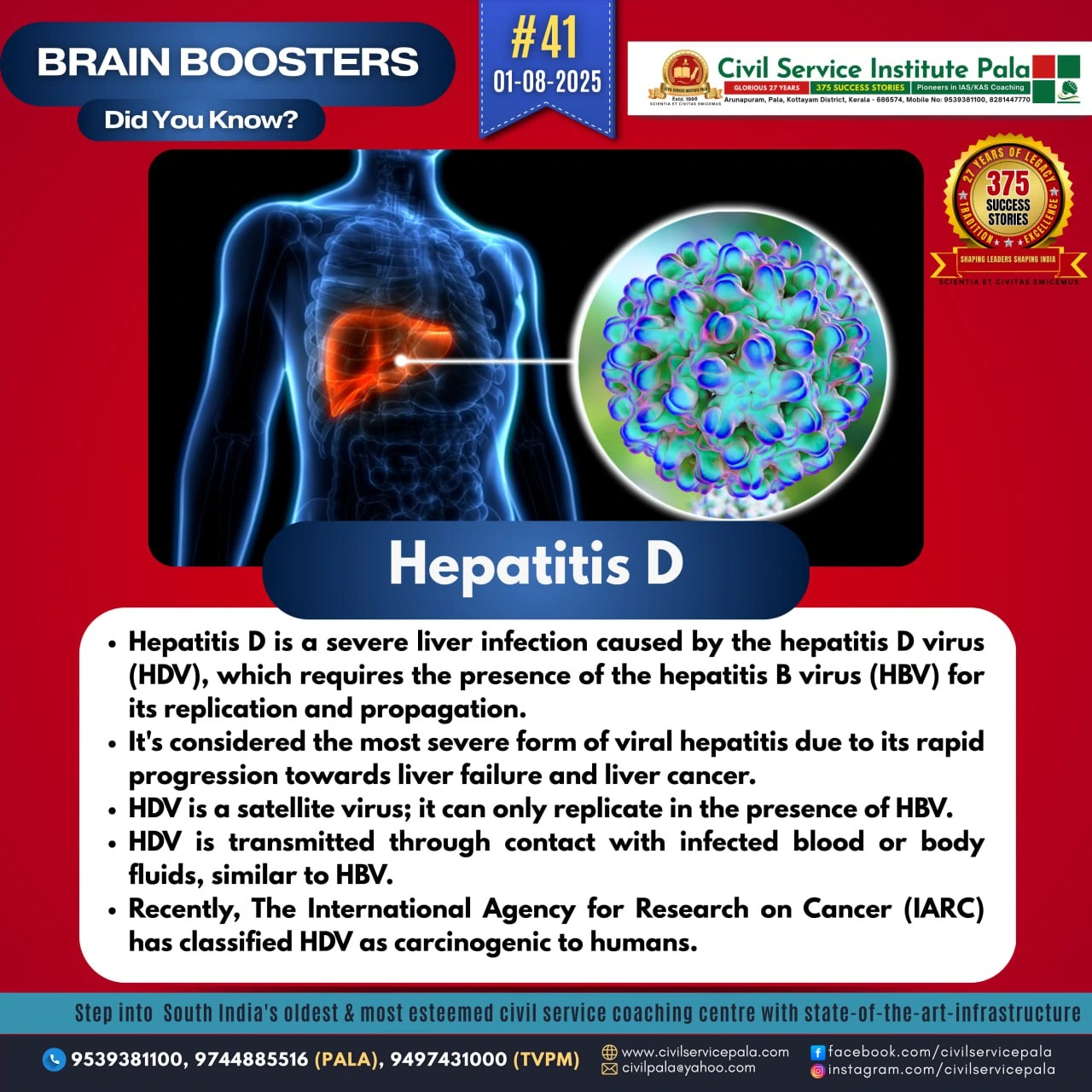
Hepatitis D
Hepatitis D, also known as Hepatitis Delta, is a liver infection caused by the Hepatitis D virus (HDV). It is considered the most severe form of viral hepatitis but has a unique requirement:
HDV can only infect individuals who are already infected with Hepatitis B (HBV).
Cause and Transmission
Virus: Hepatitis D virus (HDV) – an incomplete virus that needs HBV to replicate.
Transmission: Similar to Hepatitis B, via:
Blood-to-blood contact
Unprotected sex with an infected person
Sharing needles or syringes
Mother to child during childbirth (less common)
Types of Infection
Co-infection:
Simultaneous infection with HBV and HDV.
Can be acute and self-limiting, sometimes severe.
Superinfection:
HDV infects a person already chronically infected with HBV.
Leads to more severe liver disease and higher risk of cirrhosis and liver failure.
Symptoms
May range from mild to severe or even life-threatening:
Jaundice (yellowing of skin and eyes)
Fatigue
Nausea and vomiting
Abdominal pain
Dark urine and pale stools
Joint pain
Liver enlargement
Some cases may be asymptomatic, especially in early stages.
🩺 Diagnosis
Blood tests:
Anti-HDV antibodies
HDV RNA (to detect active infection)
HBsAg (Hepatitis B surface antigen)
Liver function tests and biopsy (to assess liver damage)
Treatment
No specific antiviral treatment for HDV is widely available.
Pegylated interferon-alpha is used, but response rates are low.
New therapies (e.g., bulevirtide) are under research and limited approval in some regions.
Liver transplant may be required in cases of severe liver failure.
Prevention
No vaccine for HDV exists.
Preventing Hepatitis B infection is the key:
HBV vaccination protects against HDV.
Avoid risky behaviors (e.g., sharing needles).
Practice safe sex.
Screen blood and organ donations.
Key Facts
HDV affects 15–20 million people worldwide.
It significantly increases the risk of cirrhosis and liver cancer.
It is most prevalent in parts of Africa, Asia, Eastern Europe, and the Amazon Basin.Source:https://www.who.int/news/item/28-07-2025-who-urges-action-on-hepatitis-announcing-hepatitis-d-as-carcinogenic
