



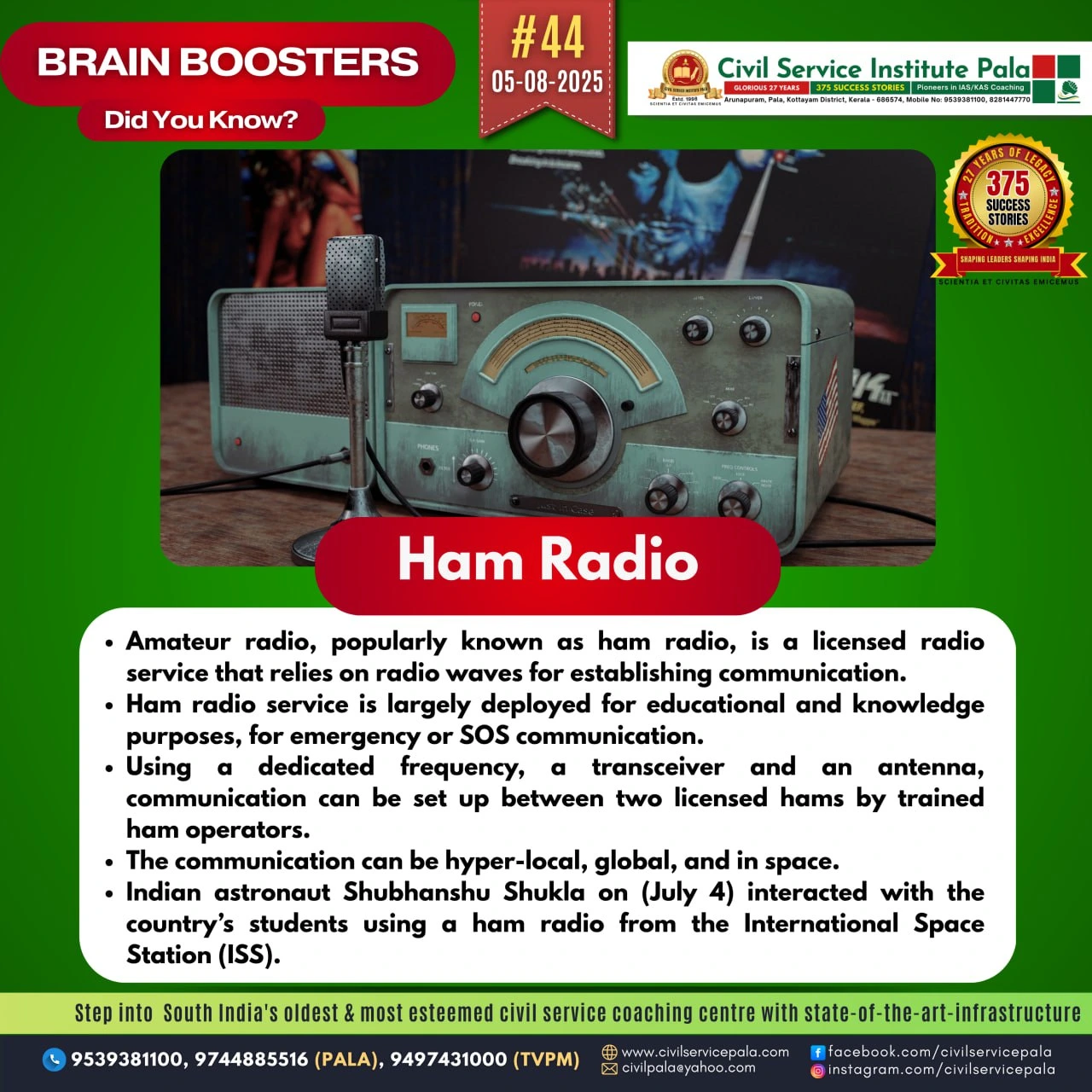
Ham Radio
Ham Radio (also known as Amateur Radio) is a popular hobby and service that brings people, electronics, and communication together. It allows licensed individuals to use designated radio frequencies for non-commercial exchange of messages, emergency communication, experimentation, and personal recreation.
Key Features of Ham Radio:
Two-Way Communication:
Operators (called “hams”) can talk to other hams locally or globally using radio signals.
Communication can happen via voice, Morse code, digital modes, or even video.
Amateur Radio Bands:
Ham radio uses specific portions of the electromagnetic spectrum set aside by governments for amateur use (like HF, VHF, and UHF bands).
Licensing Requirement:
To operate a ham radio, users must pass a licensing exam to demonstrate technical knowledge and understanding of regulations.
In India, it is regulated by the Wireless Planning and Coordination Wing (WPC) under the Ministry of Communications.
Emergency Communication:
Ham radio is vital during natural disasters (earthquakes, cyclones, floods) when regular communication fails.
Operators can quickly establish communication links to coordinate rescue and relief efforts.
Global Community:
Hams often make contacts with people around the world and participate in contests, DXing (long-distance communication), and field events.
Technical Exploration:
Ham radio encourages learning about electronics, antennas, propagation, and digital technology.
It’s used as an educational tool in science and engineering fields.
Benefits of Ham Radio:
Promotes technical skills and innovation.
Builds a strong community of communication enthusiasts.
Supports public service during emergencies.
Encourages international friendship and cultural exchange.
Popular Ham Radio Activities:
QSO (Conversations) – Making contact with other operators.
DXing – Trying to reach distant stations.
Contesting – Competing to make the most contacts.
Satellite Communication – Talking via amateur satellites.
EMCOMM – Emergency communications training and service. Source: https://indianexpress.com/article/explained/explained-sci-tech/shubhanshu-shukla-ham-radio-communication-10106016/
