



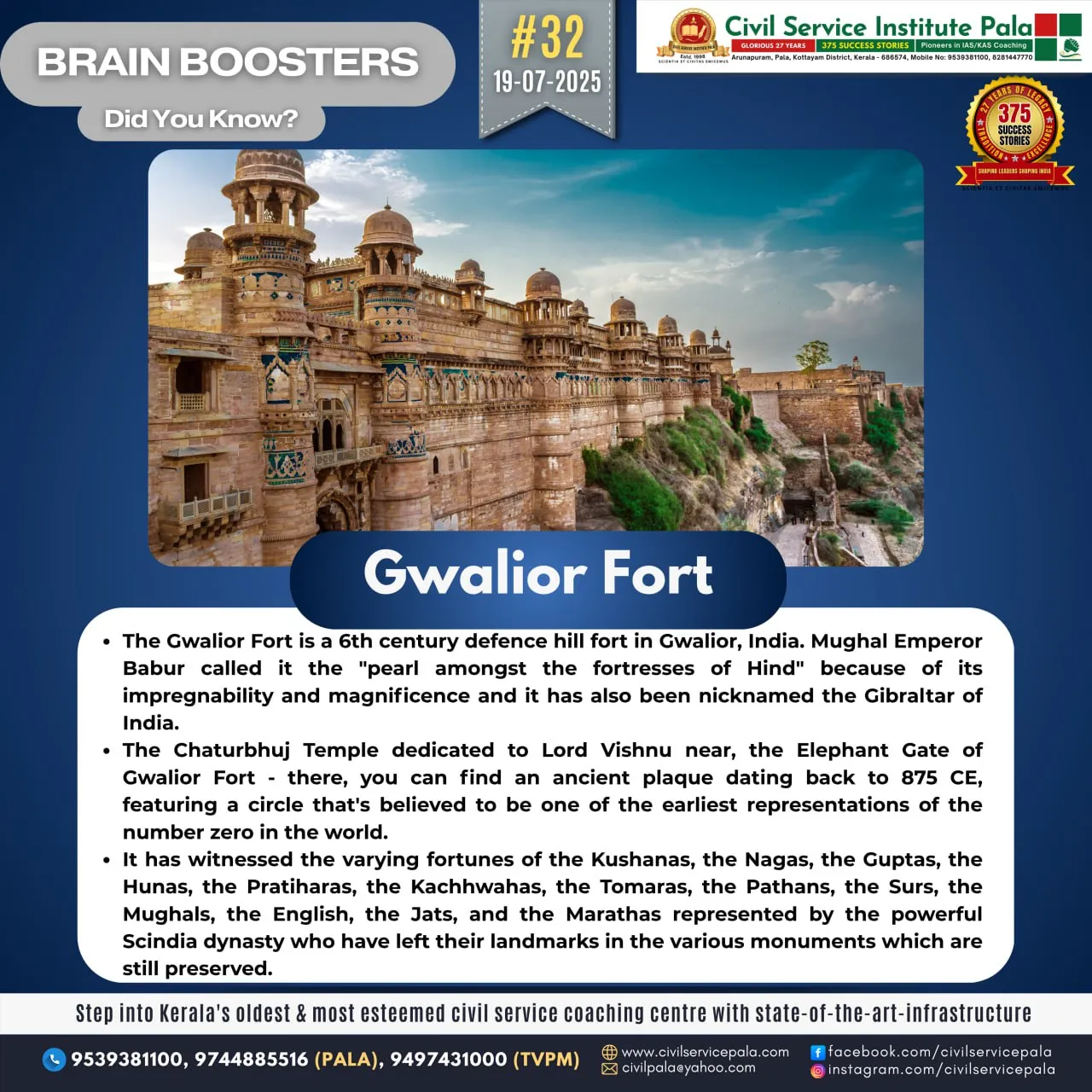
Gwalior Fort
Gwalior Fort, located in the city of Gwalior in Madhya Pradesh, India, is one of the most magnificent and historically significant forts in India. Often referred to as the “Gibraltar of India”, it stands atop a sandstone hill, dominating the surrounding landscape with its imposing structure and intricate architecture.
Historical Background:
The fort has a history dating back over 1,000 years, with references to it as early as the 6th century CE.
According to legend, it was built by a local king named Suraj Sen in the 8th century, who named it after the sage Gwalipa, who cured him of a disease.
It has seen the rule of several dynasties, including the Tomars, Mughals, Marathas, and British.
🛕 Architectural Highlights:
The fort is famous for its blend of Hindu and Islamic architecture.
The outer walls stretch over 2.5 km, and the complex is surrounded by high defensive walls and steep cliffs.
Important structures within the fort include:
Man Singh Palace: A stunning palace built by Raja Man Singh Tomar in the 15th century, adorned with blue ceramic tiles and ornate decorations.
Sas Bahu Temples: Twin 11th-century temples dedicated to Vishnu, known for their intricate carvings and sculptures.
Gujari Mahal: A palace built for Queen Mrignayani, now converted into an archaeological museum.
Teli ka Mandir: A tall and unique temple blending Dravidian and North Indian styles.
Jain Rock Sculptures: Gigantic statues of Jain Tirthankaras carved into the cliffside, reflecting the fort’s religious diversity.
Strategic & Cultural Importance:
Gwalior Fort served as a strategic stronghold due to its height and natural defenses.
It was considered nearly impregnable and was a key military site during many historical conflicts.
The fort has hosted important historical events, including imprisonment of Mughal princes and being a key site during the 1857 First War of Independence.
Modern Relevance:
Today, the fort is a popular tourist attraction and a symbol of Gwalior’s rich heritage.
It is also home to the Scindia School, one of India’s most prestigious educational institutions.
Source: https://www.peepultree.world/livehistoryindia/story/monuments/zero-number-one
