



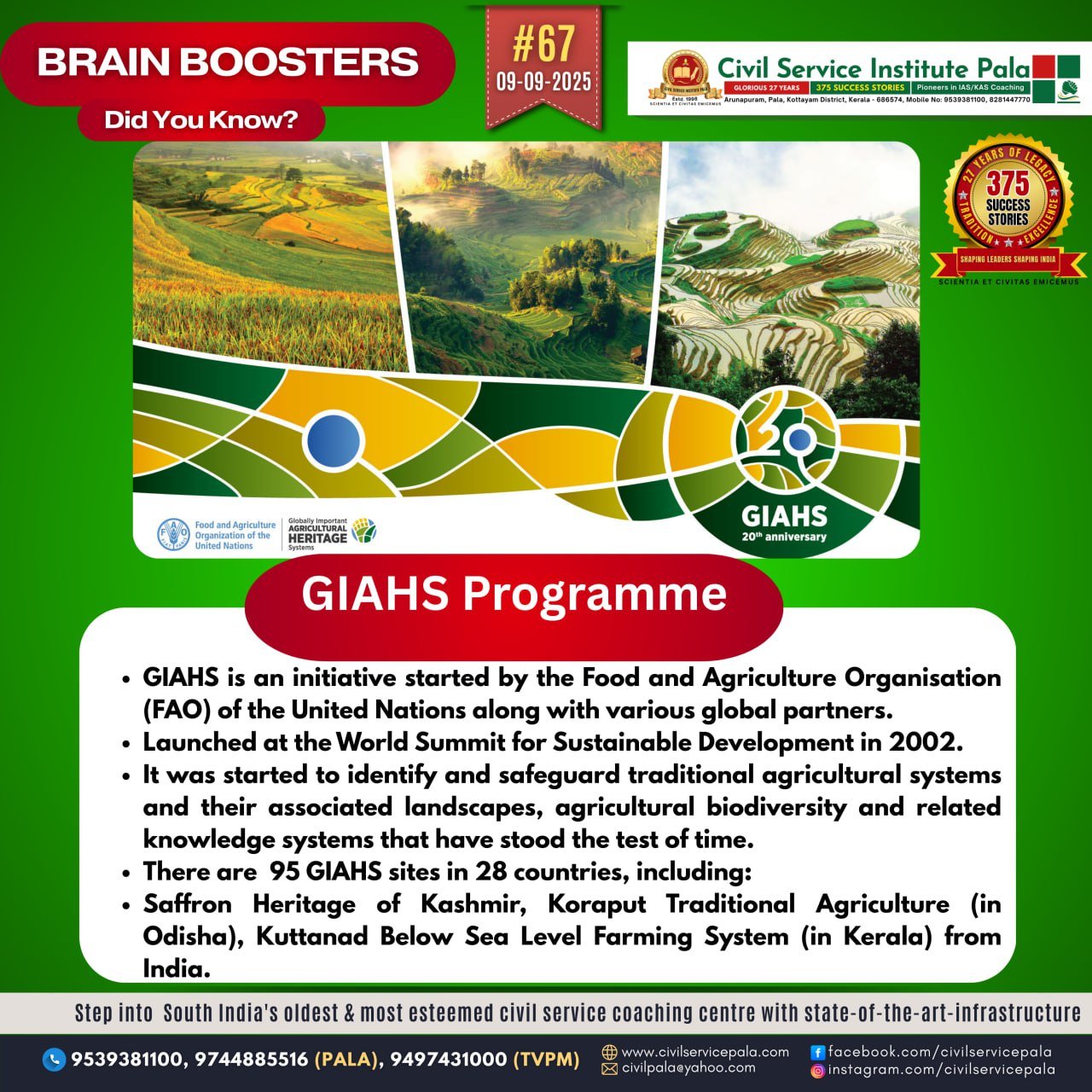
GIAHS
What is GIAHS?
The Globally Important Agricultural Heritage Systems (GIAHS) is a program launched by the Food and Agriculture Organization (FAO) of the United Nations in 2002. It recognizes and safeguards unique agricultural systems that: Have evolved over centuries, Sustain biodiversity, Support local communities, Preserve cultural heritage, and Promote sustainable development.
Key Features
Traditional Knowledge & Practices GIAHS sites rely on indigenous farming techniques passed down generations. Examples: terrace farming, floodplain agriculture, desert oasis systems. Agrobiodiversity They conserve a wide variety of crops, livestock, and fish species. These systems act as “living gene banks” important for global food security. Ecosystem Services They maintain soil fertility, water management, and pest control naturally. Reduce dependency on chemicals. Cultural Heritage Deeply linked with local rituals, festivals, and community identity. Sustainability They balance productivity with conservation, showing how humans can coexist with nature.
Examples Worldwide Rice Terraces of the Philippine Cordilleras (Philippines) Andean Agricultural Systems (Peru, Bolivia) Oasis systems of Maghreb (North Africa)
GIAHS in India Indian sites recognized under GIAHS, including: Koraput Traditional Agriculture (Odisha) – known for indigenous rice varieties. Saffron Heritage of Kashmir (J&K). Kuttanad Below Sea Level Farming (Kerala).
Importance
- Helps conserve biodiversity.
- Provides climate resilience.
- Protects indigenous knowledge.
- Promotes eco-tourism and rural development.
- Strengthens food and livelihood security for local communities.
