



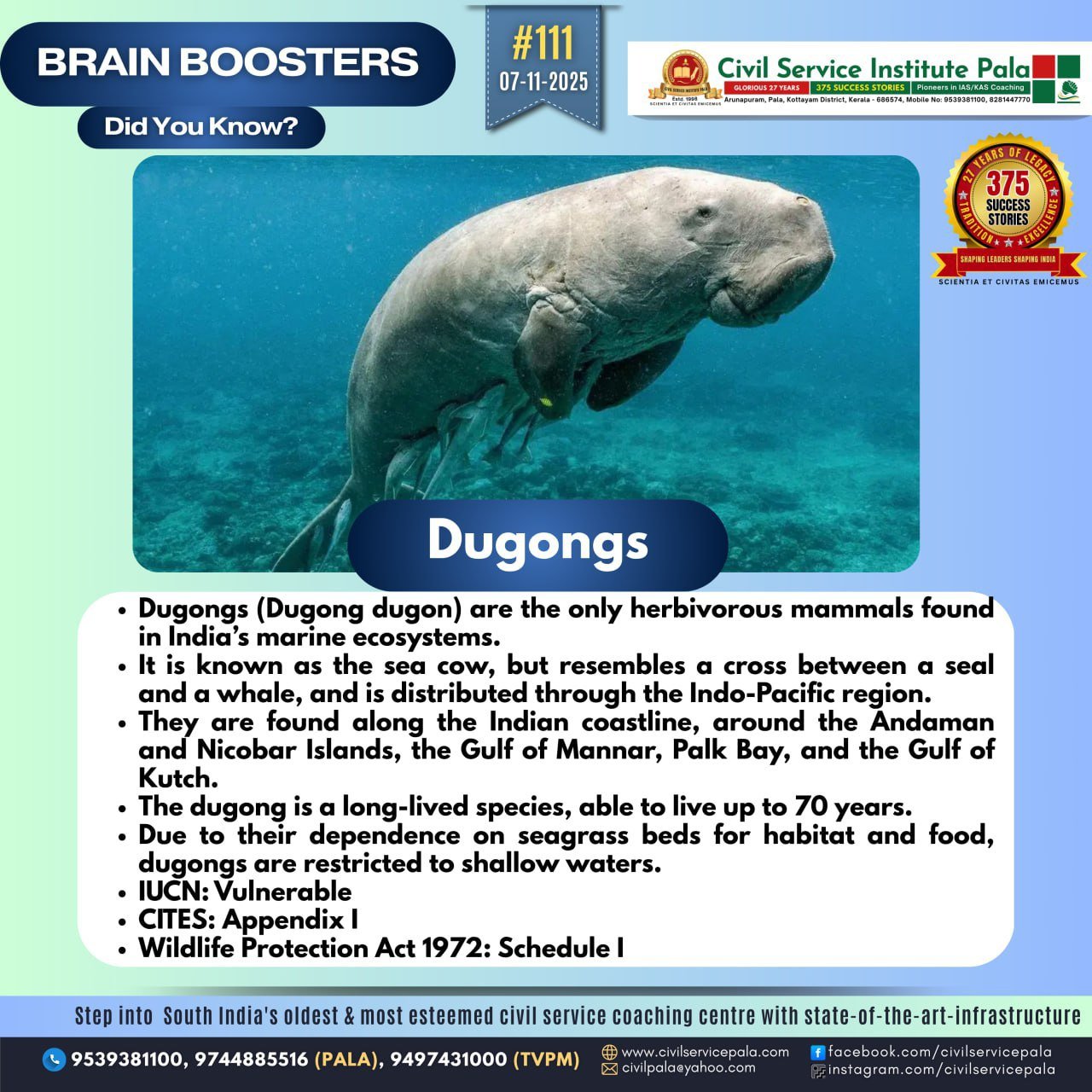
Dugongs
Scientific name: Dugong dugon Common name: Sea cow General Description: Dugongs are large marine mammals that look similar to manatees but are more closely related to elephants. They have a streamlined body, paddle-like forelimbs, and a fluked tail (like a whale’s). Their skin is thick and greyish-brown, often covered with algae.
Habitat: Found in warm coastal waters of the Indian and western Pacific Oceans. In India, they are mainly found in the Gulf of Mannar, Palk Bay, Gulf of Kutch, and Andaman & Nicobar Islands.
Diet: Dugongs are herbivorous, feeding mainly on seagrass found in shallow waters. Because of this diet, they are also called “sea cows.”
Reproduction: They have a slow breeding rate, with females giving birth to a single calf after a long gestation period (about 13–15 months). This slow rate makes population recovery difficult when numbers decline.
Conservation Status: IUCN Red List: Vulnerable Threats include habitat loss, boat collisions, fishing net entanglement, and illegal hunting.
In India: Protected under Schedule I of the Wildlife Protection Act, 1972, giving them the highest legal protection. India has launched Dugong Conservation Projects, especially in Tamil Nadu and Andaman & Nicobar regions.
