



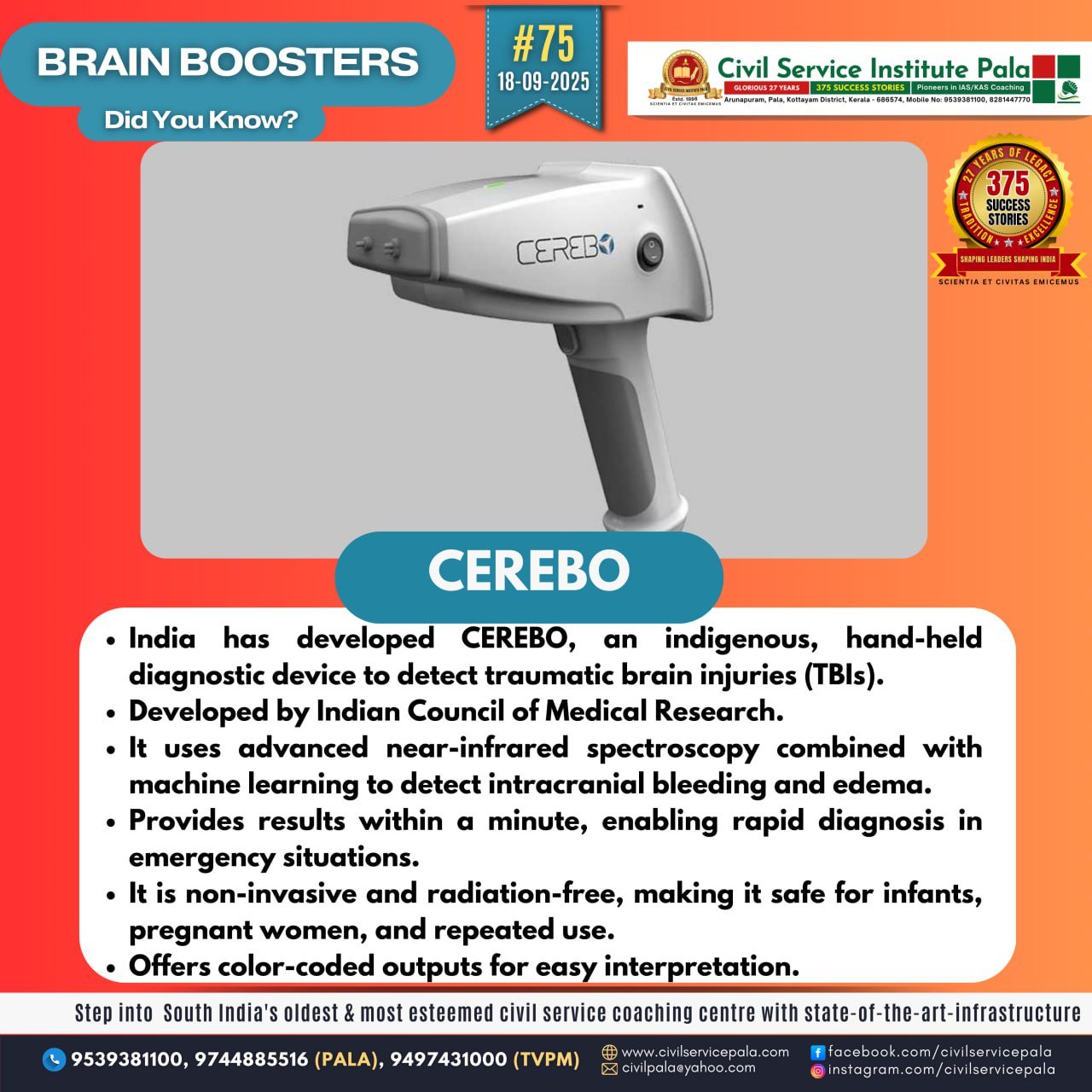
CEREBO
What is CEREBO?
CEREBO is a hand-held, portable, non-invasive diagnostic device developed in India to detect traumatic brain injuries (TBIs), especially intracranial bleeding and brain swelling (edema).
It was developed by a consortium: the Indian Council of Medical Research (ICMR) through its Medical Device & Diagnostics Mission Secretariat (MDMS), AIIMS Bhopal, NIMHANS Bengaluru, and Bioscan Research.
Key Features & Technology
Uses near-infrared spectroscopy (NIRS) combined with machine learning to detect internal bleeding or edema in the brain.
Diagnosis is fast: results in under one minute (or up to two minutes in some reports) after placing the device on part(s) of the head. The output is colour-coded so it's easy to interpret even by non-specialists. It is radiation-free, making it safer (for pregnant women, children, repeated use) than CT scans or X-rays.
Intended Use & Advantages
Particularly designed for emergency settings, rural clinics, ambulances, disaster-response units, trauma centres—places where CT/MRI facilities are unavailable, delayed, or cost-prohibitive. Helps bridge the gap of the so-called “golden hour” in traumatic injuries: early detection of internal bleeding can make a big difference in outcomes.
