



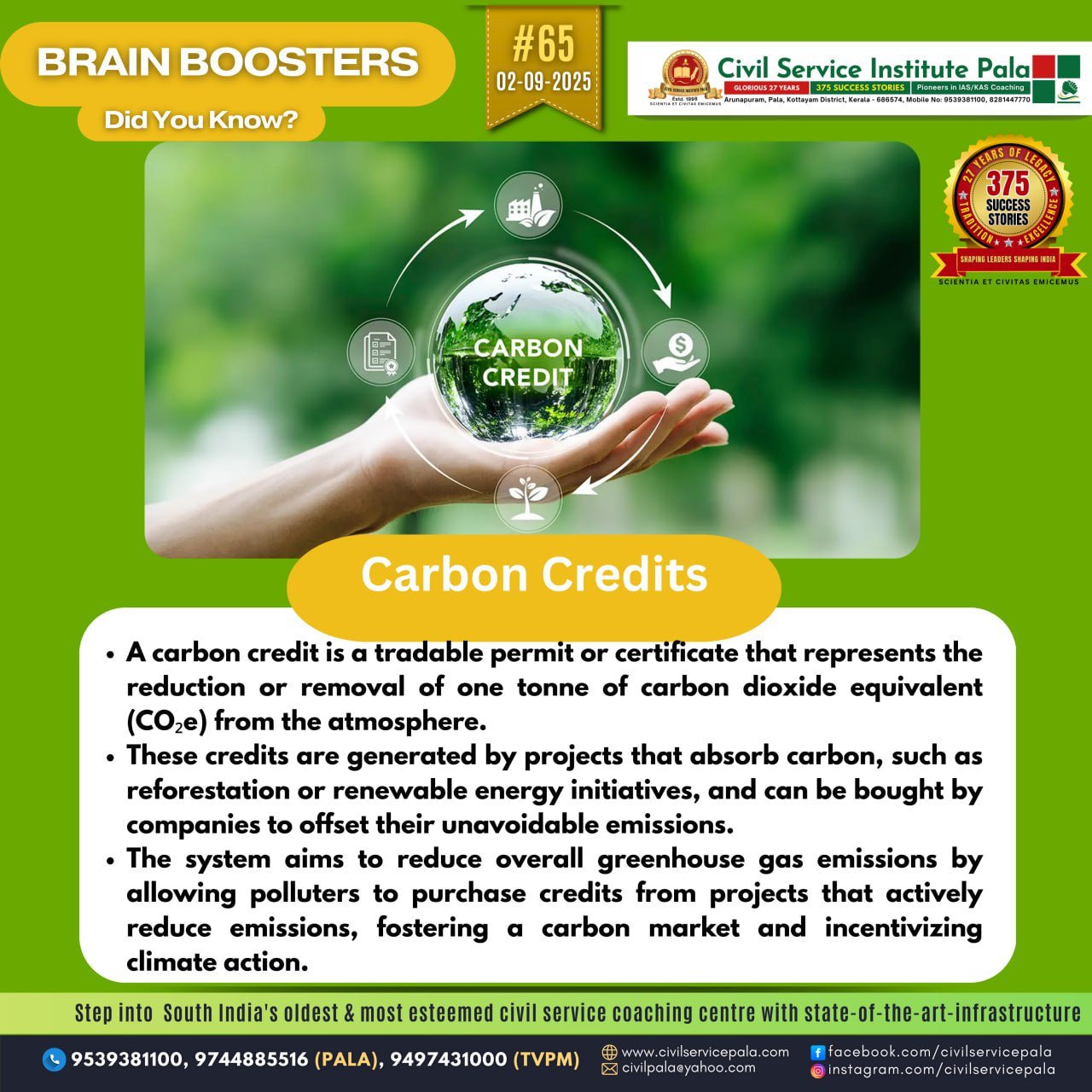
Carbon credits
Carbon credits are a market-based tool designed to reduce greenhouse gas (GHG) emissions and tackle climate change.
What are Carbon Credits?
A carbon credit is a permit or certificate that represents the right to emit one metric ton of carbon dioxide (CO₂) or an equivalent amount of another greenhouse gas (CO₂e). Organizations, industries, or countries can earn, buy, or trade these credits in carbon markets.
How Do They Work?
Cap-and-Trade System: Governments or regulators set a cap (limit) on total emissions allowed. Companies receive or buy a certain number of credits. If they emit less than their allowance, they can sell extra credits to others. If they exceed, they must buy credits or face penalties.
Carbon Offsetting:
Companies or individuals can invest in projects that reduce or remove emissions (like renewable energy, afforestation, methane capture). These projects generate carbon credits that can be purchased to “offset” emissions elsewhere.
Types of Carbon Credits
Compliance Credits: Used under mandatory systems (like the EU Emissions Trading System).
Voluntary Credits: Bought by companies or individuals who want to offset emissions voluntarily (CSR, sustainability commitments).
Examples of Projects That Generate Credits Planting trees (carbon sequestration). Renewable energy projects (solar, wind). Energy efficiency programs. Capturing methane from landfills or agriculture. Protecting forests from deforestation (REDD+ projects).
Benefits
Encourages industries to cut emissions cost-effectively. Provides funding for green projects. Creates a financial incentive for sustainable practices. Criticisms & Challenges Greenwashing risk: Companies may just buy credits instead of reducing their own emissions.
Quality concerns: Not all projects deliver real or permanent emission reductions. Market volatility: Prices of credits can fluctuate, reducing stability.
