



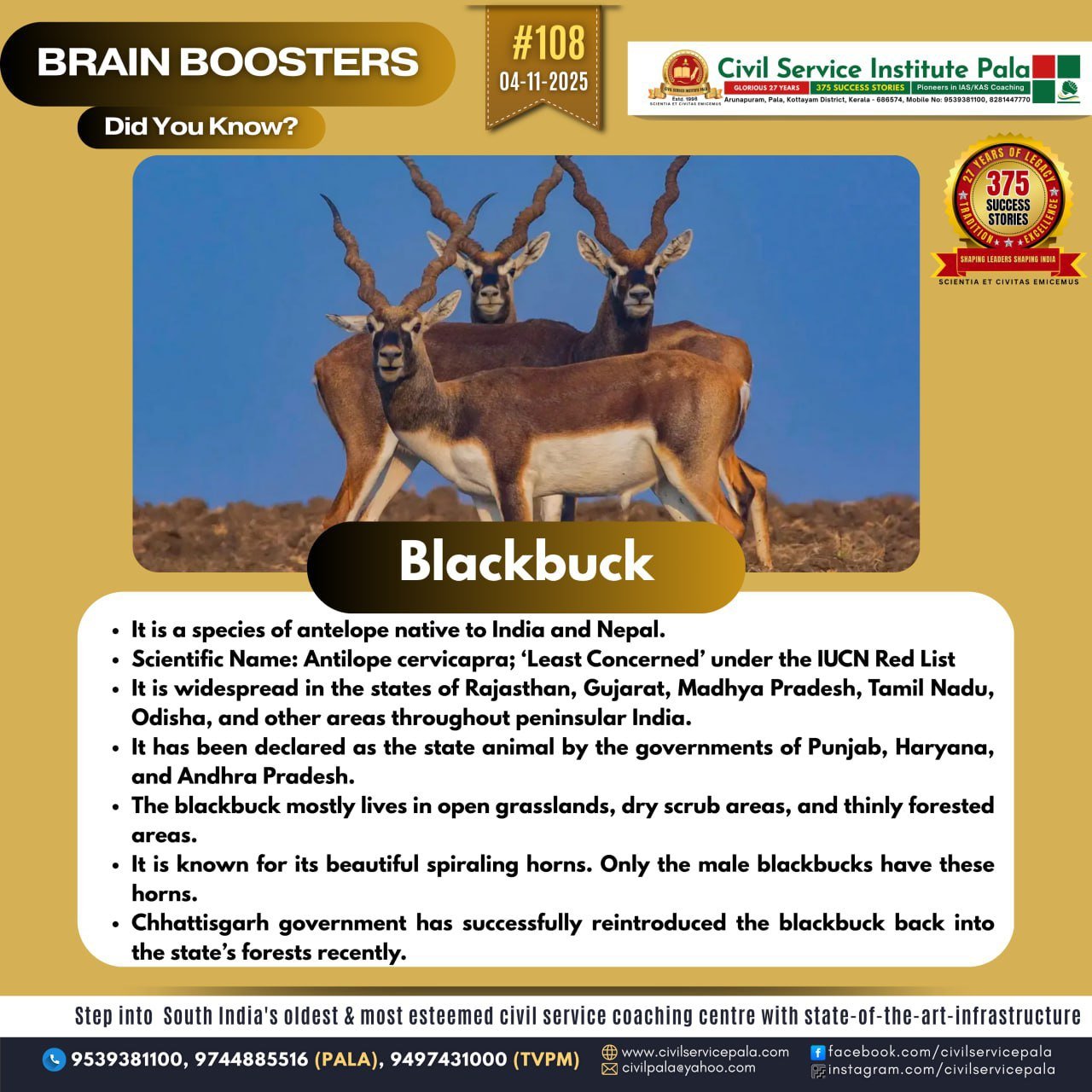
Blackbuck
Key Facts:
Habitat: Found mainly in India, with small populations in Nepal and Pakistan. They prefer open grasslands, scrublands, and semi-desert regions.
Appearance: Males are known for their spiral, ringed horns and dark brown to black coat on the upper body with white underparts. Females and young ones are light brown and usually hornless.
Diet: They are herbivores, mainly feeding on grasses, pods, and fruits.
Behavior: Blackbucks are diurnal (active during the day) and known for their speed and graceful leaping while running.
Cultural significance: Considered sacred in some Indian communities, and often associated with Indian wildlife heritage.
Conservation status: Listed as “Least Concern” by the IUCN Red List, but they face threats from poaching, habitat loss, and human encroachment.
Protection in India: Protected under Schedule I of the Wildlife Protection Act, 1972, offering them the highest level of legal protection.
