



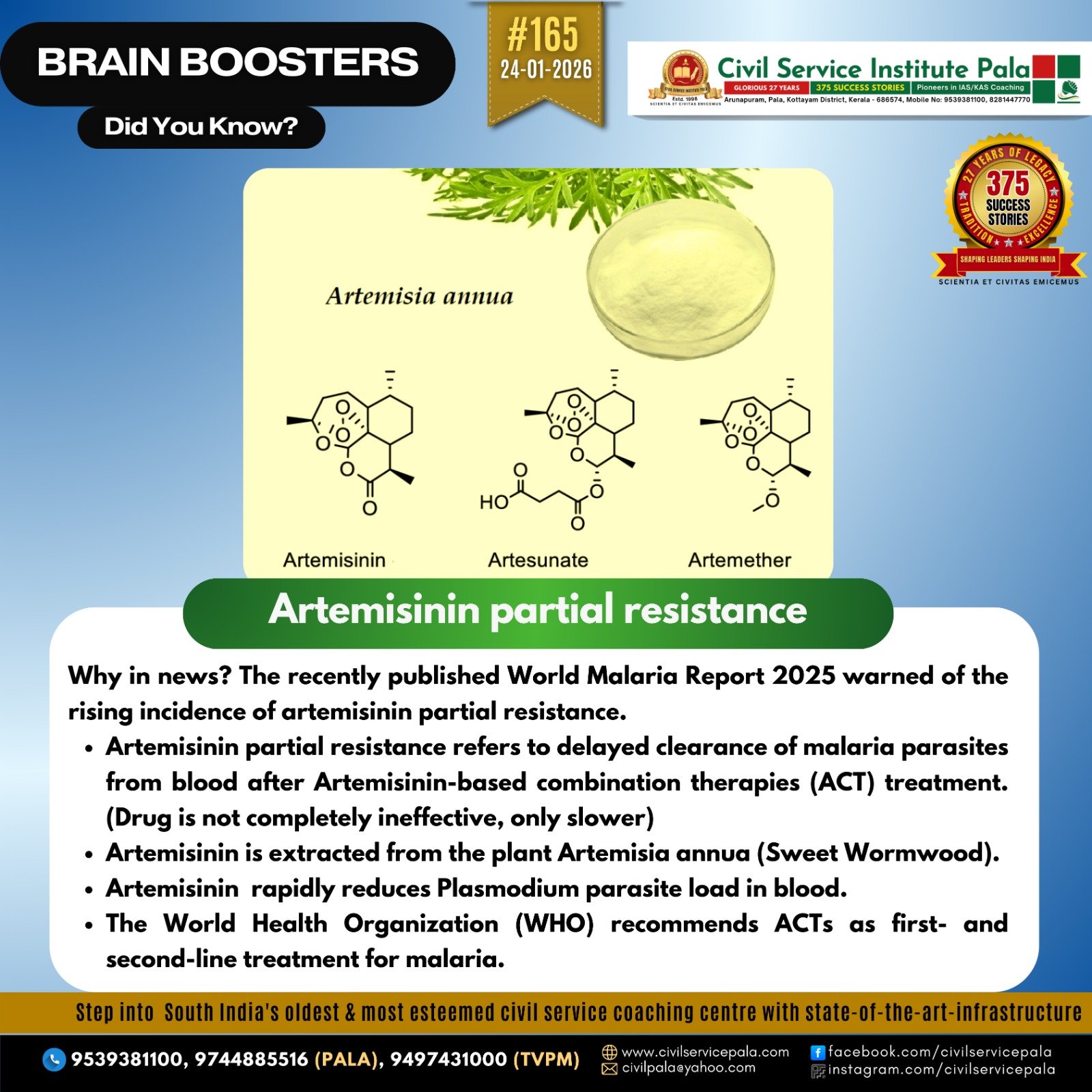
Artemisinin Partial Resistance
Artemisinin partial resistance refers to delayed clearance of malaria parasites from blood after Artemisinin-based combination therapies (ACT) treatment. (Drug is not completely ineffective, only slower)
Artemisinin is extracted from the plant Artemisia annua (Sweet Wormwood).
It is a powerful antimalarial drug that rapidly reduces Plasmodium parasite load in blood.
Artemisinin-based combination therapies (ACTs) :
WHO recommends ACTs as first & second line treatment for:
Uncomplicated Plasmodium falciparum malaria
Chloroquine-resistant Plasmodium vivax malaria
• ACT combines an Artemisinin derivative with a Partner drug
o Artemisinin derivative rapidly reduces parasite biomass in first 3 days
o Partner drug eliminates remaining parasites, ensuring complete cure.
ACTs has been integral to reducing the global malaria burden over the last 15 years.
Why partial resistance? ACT resistance developed by the parasites against artemisinin compounds affect only the Ring stage. “Full” artemisinin resistance has not been reported. With effective partner drug, partial resistant parasites are also cleared out.
Challenge : It is unknown whether partial resistance can evolve into full resistance.
